Hon. Barr. Okey-Joe Onuakalusi, Chairman of the Nigeria–U.S. Parliamentary Friendship Committee, calls for stronger U.S.–Nigeria cooperation to defeat terrorism, promote religious harmony, and remove Nigeria from the list of countries of concern.
Nigerian Parliamentary Chairman Calls for US Collaboration in Fighting Terrorism During State Department Visit
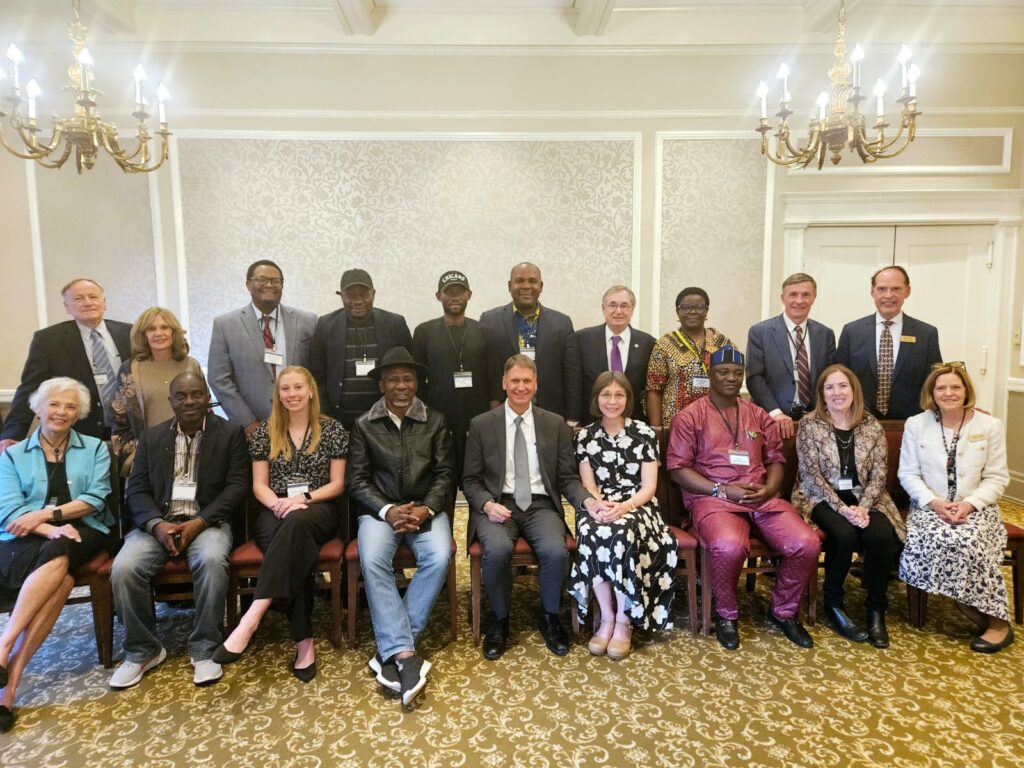
Washington, D.C. – May 1, 2025 – In a pointed address delivered at the U.S. Department of State on April 30, 2025, Barr Okey-Joe Onuakalusi JP, Chairman of the Nigeria/United States of America Parliamentary Friendship Committee, urged the United States to reconsider its stance on Nigeria’s security challenges and foster deeper cooperation to combat terrorism. The speech, presented during a visit by a delegation from Nigeria’s National Assembly, highlighted the complexities of insecurity in Northern Nigeria and emphasized the need for bilateral partnership over punitive measures.
The event brought together key Nigerian figures, including the Speaker of the 10th Assembly, His Excellency Rt. Hon. Dr. Tajudeen Abbas PhD; Minority Leader of the House of Representatives, Rt. Hon. O.K. Chinda; and Leader of the South-South Caucus, Rt. Hon. Dr. Fredrick Agbedi. They were joined by distinguished members of the National Assembly, U.S. Department of State officials, members of the press, and other dignitaries. Onuakalusi’s remarks underscored Nigeria’s secular constitutional framework and the historically harmonious coexistence among its diverse religious communities.
“Nigeria is a secular State, no State religion,” Onuakalusi stated, noting that “ordinary Nigerians of different religious colouration live together, marry together and socialize together.” He argued that terrorist activities in Northern Nigeria, often perceived externally as religious conflicts, are primarily driven by “sheer criminality.” The chairman pointed to porous borders as a major vulnerability, allowing sponsored terrorists from neighboring countries like Mali, Chad, and Niger to infiltrate and cause havoc.
Delving into the roots of heightened Boko Haram terrorism, Onuakalusi attributed its escalation to “external religious influences” and Nigeria’s initial lack of “requisite military and technological know-how” to address it effectively. He referenced historical tensions, including the anti-gay legislation enacted under former President Goodluck Jonathan’s administration, which he said displeased Western nations, particularly under President Barack Obama. This led to Nigeria being designated as a Country of Particular Concern (CPC), restricting access to military equipment needed to fight sophisticated threats.
“We are hopeful that President Trump administration will collaborate with Nigeria government with necessary cooperation in the fight against terrorism in Nigeria,” Onuakalusi expressed, signaling optimism for renewed ties under the current U.S. leadership. He also voiced concern over recent revelations that agencies like USAID may have “inadvertently funded Boko Haram in Nigeria,” calling it a significant issue warranting attention.
Central to the speech was a rebuttal of narratives portraying the killings of Christians in Northern Nigeria as state-sponsored efforts to impose Islam. “The killing of Christians in Northern Nigeria are sponsored killings from outside Nigeria: they not sponsored or funded by the Nigerian government to impose Islamic religion in Nigeria,” he clarified. Instead, Onuakalusi advocated for U.S.-Nigeria collaboration, arguing that placing Nigeria under CPC and denying arms supplies hinders progress. “US and Nigeria should forge collaboration to fight and defeat terrorism in Nigeria,” he urged, adding that “defeating terrorism in Nigeria is not a rocket science. It is doable if all hands are together.”
The chairman warned that without U.S. support, Nigeria might be compelled to seek assistance from other nations—a scenario the House of Representatives wishes to avoid. “As things stand now, if the US refuses to collaborate with Nigeria in fighting terrorism Nigeria may be pushed to seek the much-needed collaboration with other countries and we at the House of Representatives of Nigeria doesn’t want that,” he said. He called on the Department of State to “jettison the single narrative on the cause of insecurity in Nigeria: delist Nigeria as a CPC and partner with the government and people of Nigeria to flush out insurgency in all forms.”
The address concluded on a unifying note: “God bless United States of America. Most importantly, God bless federal Republic of Nigeria.”
This visit and speech come amid ongoing discussions about U.S. foreign policy in Africa, particularly regarding counterterrorism efforts. Nigerian officials have long emphasized the transnational nature of threats like Boko Haram, which has spilled over into the Lake Chad region. Analysts suggest that delisting Nigeria from CPC could pave the way for enhanced military aid, intelligence sharing, and joint operations, potentially stabilizing the region and benefiting broader African security.
As of now, the U.S. Department of State has not issued an immediate response to the delegation’s appeals, but the event highlights the evolving dynamics in Nigeria-U.S. relations under the Trump administration. For more details, contact Barr Okey-Joe Onuakalusi at okeyjoe.onuakalusi@gmail.com.
Schedule An Appointment
Fill out your details below with the service that you need, date and preferred hour and we’ll get back to you to book an appointment.
Follow Us
Suite 0.82, House of Representative, National Assembly, Three Arms Zone, Abuja
0803 866 7252 | info@okey-joeonuakalusi.com